Emergency Overview
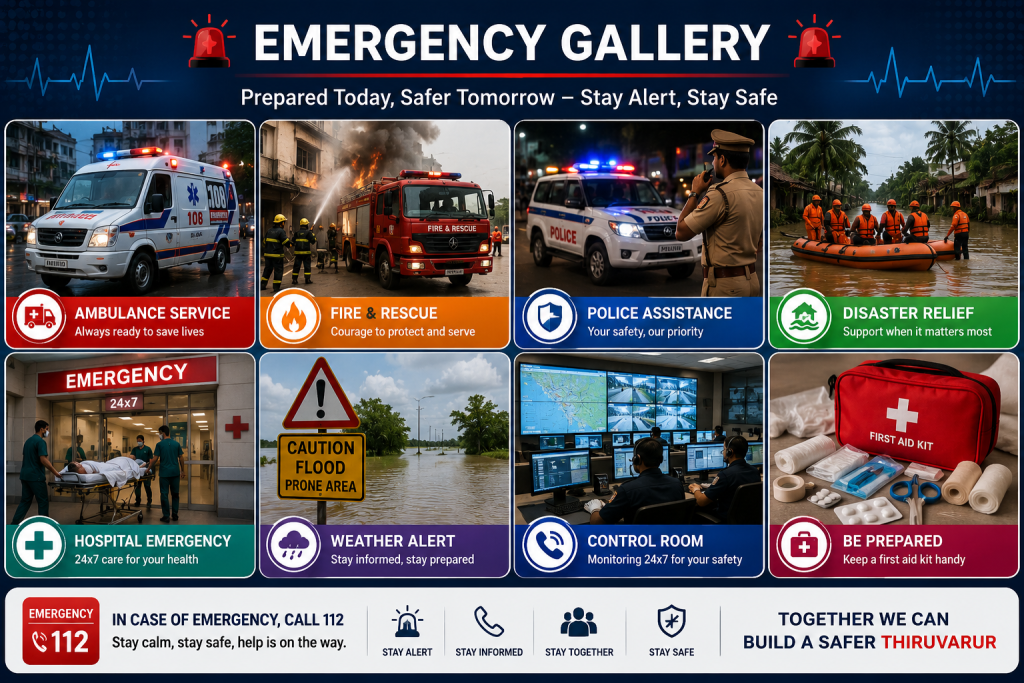
The Emergency Services of Thiruvarur District are dedicated to protecting the lives and property of residents and visitors through rapid response, disaster preparedness, and public safety initiatives. Whether facing medical emergencies, fire incidents, natural disasters, road accidents, or law enforcement situations, the district’s emergency departments work together to provide timely assistance and ensure community safety.
Safety Guidelines
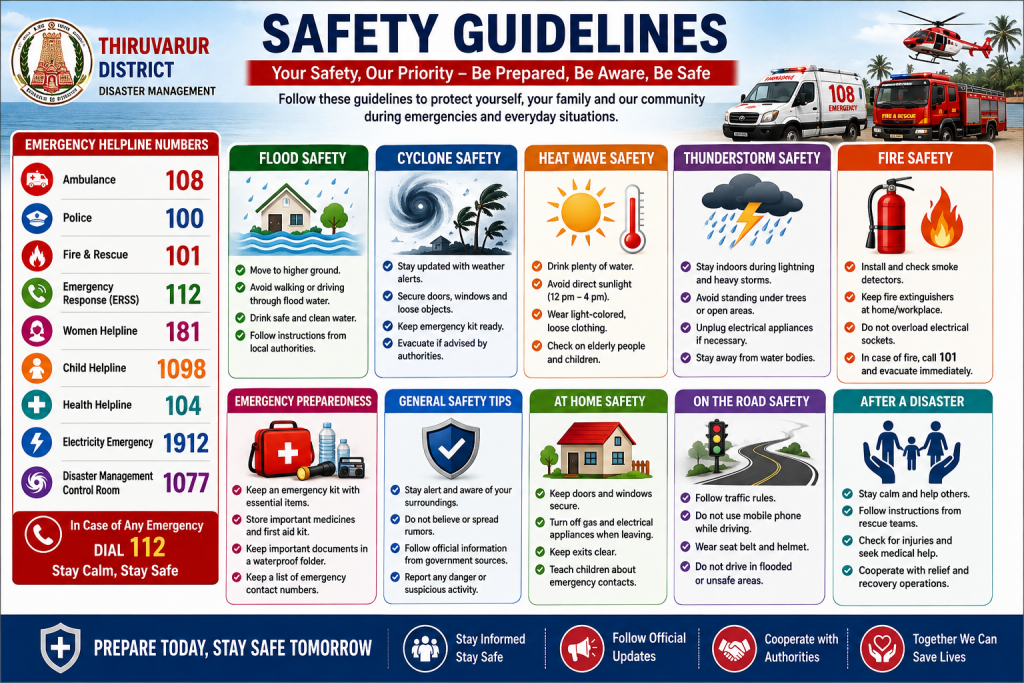
The safety of residents and visitors is a top priority in Thiruvarur District. Following basic safety precautions and staying informed during emergencies can significantly reduce risks and help protect lives and property. Always remain alert, follow official instructions, and be prepared to respond quickly during natural disasters or public emergencies.
Weather Report of Thiruvarur District
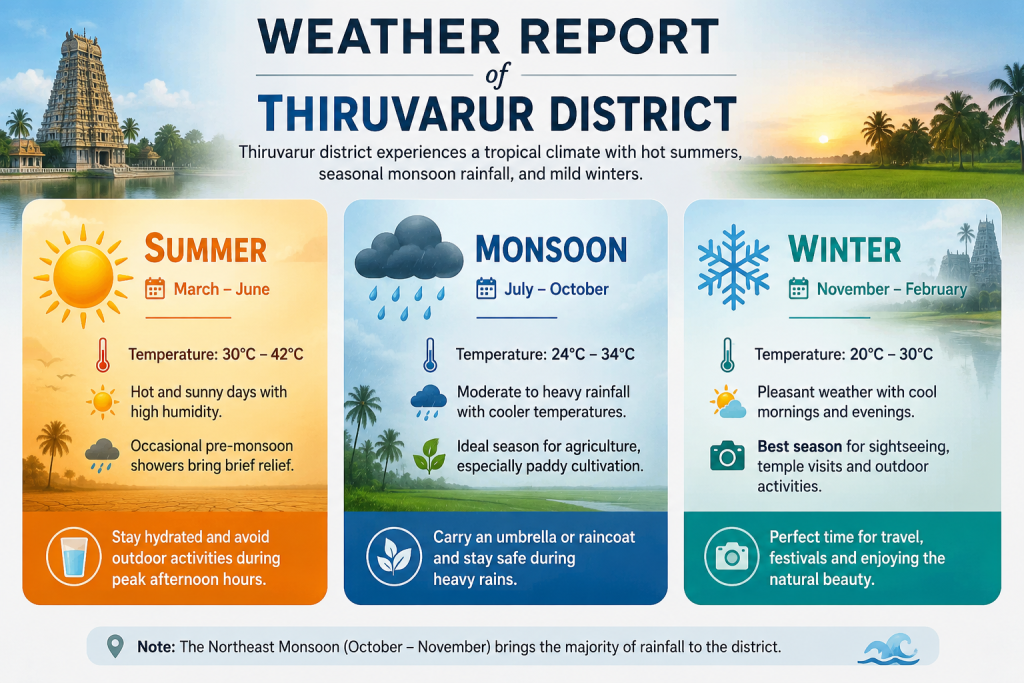
Thiruvarur District experiences a tropical climate with hot summers, seasonal monsoon rainfall, and mild winters. Due to its proximity to the Bay of Bengal, the district has relatively high humidity throughout the year. Agriculture in the district is largely dependent on the monsoon, especially the Northeast Monsoon, which brings the majority of annual rainfall.
☀️ Summer (March – June)
- Hot and sunny days with high humidity.
- Daytime temperatures generally range from 30°C to 42°C.
- Stay hydrated and avoid outdoor activities during peak afternoon hours.
🌧️ Monsoon (July – October)
- Moderate to heavy rainfall with cooler temperatures.
- Temperature ranges between 24°C and 34°C.
- Ideal season for agriculture, especially paddy cultivation, and the landscape becomes lush and green.
❄️ Winter (November – February)
- Pleasant weather with cool mornings and evenings.
- Temperature ranges from 20°C to 30°C.
- Best season for sightseeing, temple visits, bird watching, and outdoor travel.
🌿 Best Time to Visit
The winter season (November to February) is considered the best time to visit Thiruvarur District because of its pleasant climate, comfortable temperatures, and favorable conditions for tourism and cultural activities.
Emergency Contact Numbers
| 🚨 Emergency Service | 📞 Contact Number |
|---|---|
| 🚑 Ambulance | 108 |
| 👮 Police Control Room | 100 |
| 🚒 Fire & Rescue Services | 101 |
| ☎️ Emergency Response Support System (ERSS) | 112 |
| 👩 Women Helpline | 181 |
| 👶 Child Helpline | 1098 |
| 🏥 Health Helpline | 104 |
| 🚆 Railway Enquiry | 139 |
| ⚡ Electricity Emergency | 1912 |
| 🌪️ Disaster Management Control Room | 1077 |
| 🚜 Agriculture Helpline | 1551 |
| ☣️ Poison Information Centre | 1800-116-117 |
Emergency Services
Medical
- 24×7 Ambulance Service
- Emergency Trauma Care
- Government Hospitals
- Blood Bank Support
Fire Rescue
- Fire Fighting
- Rescue Operations
- Industrial Fire Safety
- Emergency Response
Police
- Crime Reporting
- Traffic Control
- Tourist Assistance
- 24×7 Security
Disaster
- Cyclone Alerts
- Flood Rescue
- Relief Camps
- Early Warning System
Power
- Power Failure
- Transformer Faults
- Electricity Complaints
- Quick Restoration
Animal Rescue
- Snake Rescue
- Wildlife Rescue
- Animal Control
- Rescue Assistance
Disaster Management
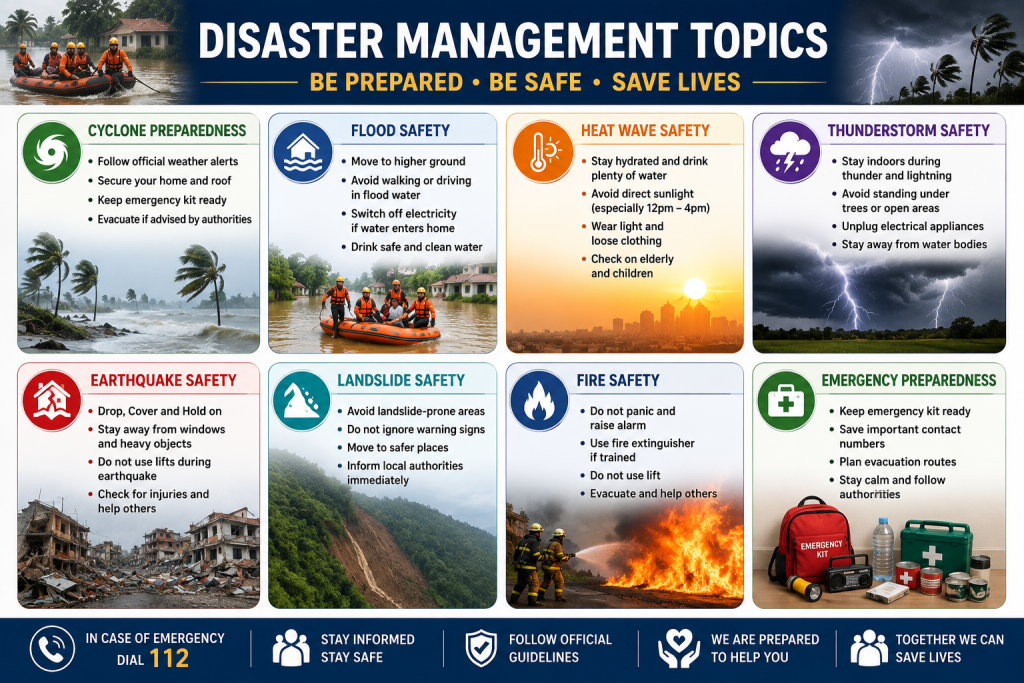
Disaster Management in Thiruvarur District focuses on protecting lives, property, and the environment through effective preparedness, timely response, relief, and recovery measures. As a coastal district, Thiruvarur is vulnerable to natural disasters such as cyclones, heavy rainfall, flooding, thunderstorms, and heat waves. The district administration, along with emergency response agencies, works continuously to strengthen disaster preparedness, issue early warnings, conduct rescue operations, and provide relief to affected communities.
Citizens are encouraged to stay informed through official weather alerts, prepare emergency kits, follow evacuation guidelines when necessary, and cooperate with local authorities during emergencies. Community awareness, proper planning, and quick response play a vital role in minimizing the impact of disasters and ensuring public safety.
Emergency Gallery